Understanding Commercial Heating Installation Requirements
When your business requires a new commercial heating system, the installation process demands expertise that goes far beyond residential HVAC work. At Luxaire HVAC Services, Inc., we specialize in designing and implementing heating solutions that match the unique demands of commercial spaces throughout Long Island, including Baldwin, Franklin Square, Freeport, Long Beach, Oceanside, and Valley Stream. Commercial heating installation involves complex load calculations, zoning requirements, and equipment specifications that must align perfectly with your building’s architecture and operational needs.
The process begins with a comprehensive assessment of your facility’s heating requirements. Our highly experienced Sales Engineers evaluate factors including building size, insulation quality, occupancy patterns, and existing ductwork infrastructure. We examine heat loss calculations through walls, windows, and roof structures while considering the specific activities conducted within your space. Manufacturing facilities require different heating approaches than office buildings, and retail spaces have distinct comfort requirements compared to warehouses. This detailed analysis ensures we select equipment with the appropriate capacity and efficiency ratings for your specific application.
Equipment Selection and System Design
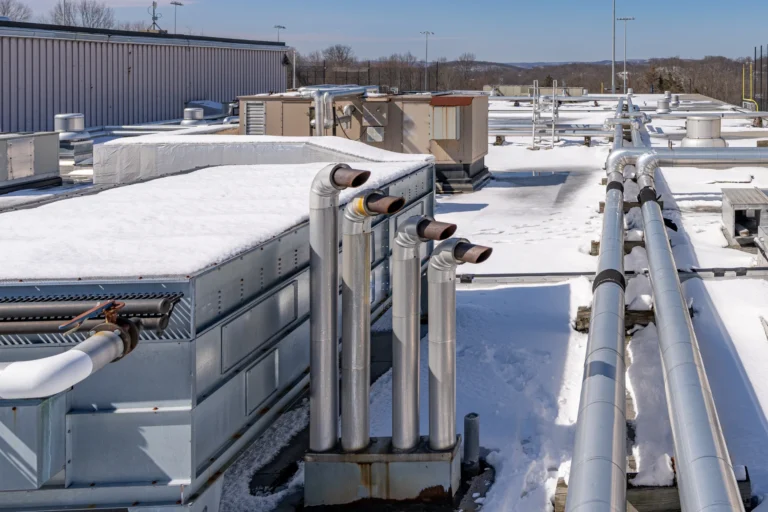
Choosing the right heating equipment for commercial installation involves evaluating multiple technologies and configurations. We represent the most trusted and innovative engineered products available in the industry, each designed for specific requirements of different applications. Rooftop units remain popular for many commercial buildings due to their space-saving design and simplified ductwork routing. These systems can range from 5 to 150 tons of heating capacity, with options for gas, electric, or dual-fuel operation. Package units offer similar benefits with ground-level installation, making maintenance more accessible for certain facility layouts.
Split systems provide flexibility when rooftop or exterior space limitations exist. These configurations place the furnace or air handler inside the building while connecting to outdoor condensing units through refrigerant lines. For larger facilities, we often recommend modular boiler systems that provide redundancy and staging capabilities. These systems can maintain partial heating capacity even if one unit requires maintenance, ensuring continuous comfort for building occupants. Variable refrigerant flow systems represent cutting-edge technology for buildings requiring precise zone control, allowing different areas to maintain independent temperature settings while maximizing energy efficiency.
Installation Process and Project Management
Our installation process follows strict protocols to minimize disruption to your business operations while ensuring code compliance and system reliability. We provide our clients with a wide range of HVAC contracting services, handling both new construction projects and the remodeling of existing facilities. The installation timeline typically begins with equipment delivery coordination and staging area preparation. Our installation teams coordinate with your facility management to schedule work during off-peak hours when possible, reducing interference with daily operations.
The physical installation involves multiple specialized trades working in coordination. Mechanical contractors handle equipment placement and securing, ensuring proper clearances for maintenance access and code compliance. Sheet metal fabricators create custom ductwork transitions and connections, maintaining proper airflow velocities and minimizing pressure drops throughout the distribution system. Electrical contractors install power supplies, control wiring, and integrate building automation systems. Pipefitters handle gas connections, condensate drainage, and hydronic piping for boiler systems. Throughout this process, we maintain strict safety protocols and ensure all work meets local building codes and manufacturer specifications.
Energy Efficiency and Cost Analysis
Modern commercial heating systems offer substantial energy savings compared to equipment installed even ten years ago. Our mechanical design assistance includes equipment cost analysis that examines both initial investment and long-term operational expenses. High-efficiency furnaces now achieve Annual Fuel Utilization Efficiency ratings exceeding 95 percent, converting nearly all fuel energy into usable heat. Condensing boilers extract additional heat from exhaust gases, pushing efficiency levels even higher. These improvements translate directly into reduced utility costs and lower carbon emissions for your facility.
We analyze utility rate structures to optimize equipment selection and operational strategies. Time-of-use rates may favor thermal storage systems that generate heat during off-peak periods. Demand charges can be managed through staged equipment operation and load shedding capabilities. Many commercial heating systems now qualify for utility rebates and tax incentives, particularly when replacing older, inefficient equipment. Our team assists with rebate applications and documentation requirements, helping offset initial installation costs while maximizing your return on investment.
System Integration and Controls
Contemporary commercial heating installation extends beyond equipment placement to encompass sophisticated control systems that optimize comfort and efficiency. Building automation systems integrate heating equipment with ventilation, cooling, and lighting controls, creating unified facility management platforms. These systems monitor temperatures throughout your building, adjusting heating output based on occupancy schedules, outdoor conditions, and zone requirements. Smart thermostats and sensors detect occupancy patterns, reducing heating in unoccupied areas while maintaining comfort where needed.
As leading providers in project design for commercial HVAC equipment on Long Island, we implement control strategies that balance comfort with efficiency. Demand-controlled ventilation adjusts fresh air intake based on carbon dioxide levels, maintaining indoor air quality while minimizing heating loads. Economizer controls utilize free cooling when outdoor conditions permit, reducing mechanical heating requirements. Integration with existing building management systems ensures seamless operation across all facility systems.
Maintenance Planning and Long-term Support
Successful commercial heating installation includes planning for ongoing maintenance requirements. We determine the best approach to optimize results through comprehensive maintenance programs tailored to your equipment and operational needs. Regular maintenance tasks include:
- Filter replacement schedules based on facility conditions and equipment specifications
- Combustion analysis and burner adjustments to maintain peak efficiency
- Heat exchanger inspections to identify potential issues before failure occurs
- Control system calibration ensuring accurate temperature regulation
- Safety device testing including pressure switches and flame sensors
Our maintenance programs extend equipment lifespan while maintaining manufacturer warranties and ensuring reliable operation throughout heating season. Preventive maintenance reduces emergency repair costs and minimizes unexpected downtime that disrupts business operations. From HVAC system design, installation, and logistics to essential upkeep and repair, we provide comprehensive support throughout your equipment’s operational life. No matter the complexity of the job, we concentrate on your specific requirements to achieve your highest expectations, ensuring your commercial heating system delivers reliable, efficient performance year after year.